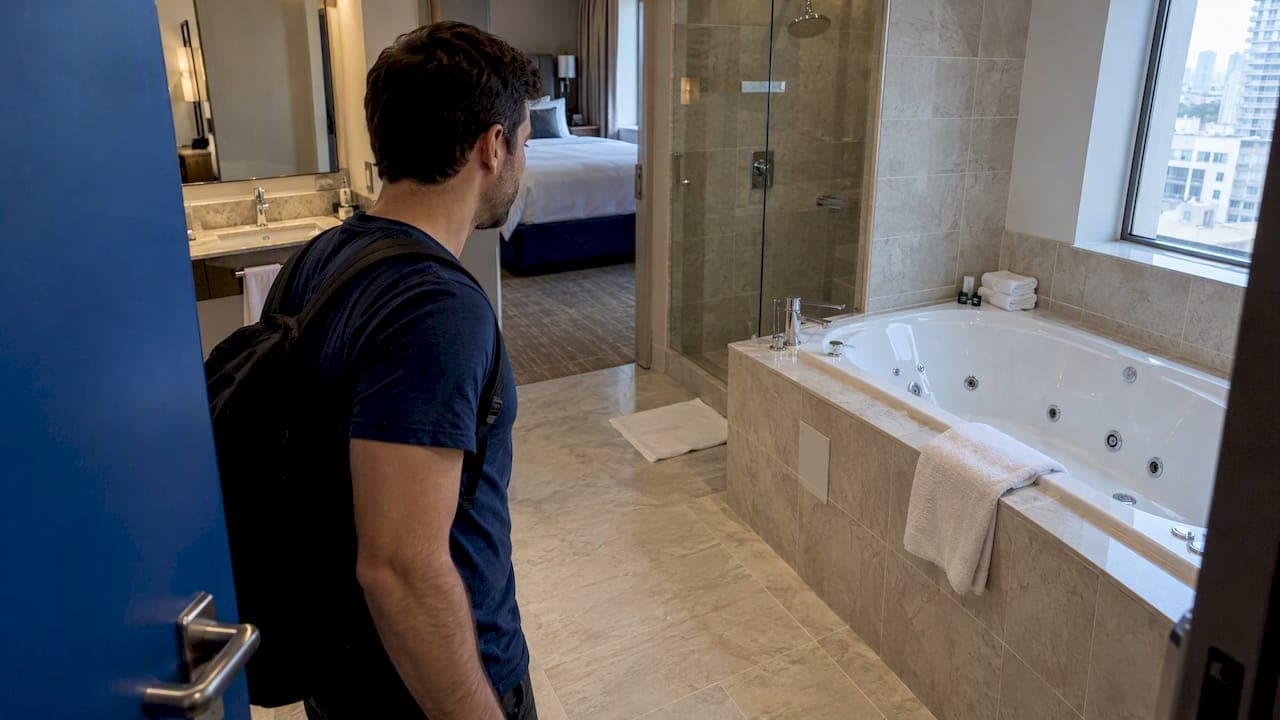
Hotels typically deliver a more reliable, professionally maintained private hot tub experience than Airbnb rentals, mainly because of standardized cleaning protocols and on-site staff who manage the equipment daily. Airbnbs can offer more unique setups, like wood-fired or deck-side tubs, but upkeep depends entirely on the individual host. Choose a hotel when you need a guarantee and consistent safety standards. Choose a rental when uniqueness or potential savings matter more than certainty. The sections below cover cost, privacy, safety, and how to verify either option before you book.
TL;DR:
- For rentals, add nightly rates, cleaning, heating, and service fees, then divide by nights; flat charges weigh more heavily on short stays.
- Treat a listing’s hot tub as potentially shared: ask whether other guests can access it, and request a current photo showing its location and boundaries.
- CDC guidance calls for chlorine at 3 to 10 parts per million, bromine at 4 to 8, and pH between 7.2 and 7.8.
- Before arrival, confirm the tub works, ask when it was last professionally serviced, and check heating charges, usage rules, and the property’s cancellation terms.
Table of Contents
- Hotels vs Airbnbs: Who Actually Delivers on the Hot Tub Promise
- What a Hot Tub Really Costs Once You Add Up the Fees
- Is the Hot Tub Actually Private, or Are You Sharing It?
- Why Hot Tub Maintenance Is a Safety Issue, Not Just a Comfort One
- How to Lock In a Working, Private Hot Tub Before You Travel
- How We Verify Hotels With Real Private In-Room Jacuzzis
- Ambiance, Noise, and Service: What the Soak Actually Feels Like
- Cancellation Policies: What Happens if Plans Change
- What Else You Get Bundled With a Jacuzzi Suite
- Does the Neighborhood Matter as Much as the Tub Itself?
- Why Responsiveness Changes the Whole Experience
- A Quick Rubric for Choosing Between the Two
- Find a Verified Private Hot Tub Without the Guesswork
- FAQ
- Sources
Hotels vs Airbnbs: Who Actually Delivers on the Hot Tub Promise
The gap between what a listing promises and what you get at check-in comes down to oversight. Hotels run on standardized systems: housekeeping teams follow set cleaning schedules, maintenance staff check equipment on a recurring basis, and front desks are staffed around the clock if something breaks. Many properties also follow industry frameworks like AHLA's Safe Stay guidelines, which outline daily cleaning targets for high-touch areas and shared facilities. That structure is why a jacuzzi suite booked today tends to look and function the same way it did in the listing photos.
Airbnbs operate on a different model. A host owns one property, sets their own maintenance routine, and decides how often the tub gets serviced. That variability cuts both ways. You might find a private in-deck hot tub overlooking a mountain view, a wood-fired tub with real rustic charm, or a portable inflatable tub the host sets up only on request. None of that is standardized, and upkeep quality ranges widely from one listing to the next.
A few traveler types tend to do better with each option; for example, couples often look for top room amenities for couples in Iceland getaways to enhance their stay.
- Couples prioritizing certainty: a hotel jacuzzi suite removes the guesswork, since staff manage cleaning and repairs.
- Travelers chasing a unique setting: an Airbnb with a scenic or unusual tub setup can deliver an experience no hotel room replicates.
- Groups or longer stays: rentals often make more financial sense when splitting a property among several guests, though tub maintenance still varies by host.
- Anyone booking last minute: hotels are easier to verify quickly through standardized hotel amenity checks since listings tend to use consistent language.
If predictable access and professional oversight matter most, a hotel wins. If a specific setting or atmosphere is the priority, a rental might be worth the added uncertainty.
What a Hot Tub Really Costs Once You Add Up the Fees
The nightly rate rarely tells the full story. Rental listings frequently tack on separate charges for running a hot tub, and those fees can change the value equation significantly compared to a hotel's all-in pricing.
Watch for these common add-ons:
- Heating fees: some hosts charge a flat rate or per-day fee just to run the heater, separate from the cleaning fee.
- Pool or spa service charges: properties with a shared pool and hot tub combo sometimes bundle a maintenance surcharge into the total price.
- Cleaning fees: a fixed cleaning charge gets divided across your total nights, which distorts the math on a short stay far more than a week-long one.
- Deposit holds: many rentals include a refundable deposit that is not part of the advertised nightly rate but still affects your upfront cost.
Because cleaning and heating fees are usually flat, a two-night stay absorbs a much higher per-night cost than a seven-night stay. Hotels tend to avoid this problem since the jacuzzi is simply part of the room rate. Travel reporting notes that rental hosts commonly disclose pool or hot tub heating fees only in listing fine print, which makes them easy to miss during a quick comparison.
Pro Tip: Add the nightly rate, cleaning fee, and any heating or service charge, then divide by total nights, that's your true per-night cost, and it's the only number worth comparing across listings.
Is the Hot Tub Actually Private, or Are You Sharing It?
Listing language is not always literal. "Private hot tub" should mean it's exclusively yours, but "hot tub" on its own sometimes means a shared amenity on the property, and "shared" means exactly that: other guests or units have access too.
A few signals help you read between the lines:
- Fencing or enclosed decking in photos usually indicates a tub reserved for one unit rather than a communal space.
- Proximity to the unit matters: a tub shown steps from a private entrance reads differently than one centered in a shared courtyard.
- Labeled photos that show the tub's exact location relative to the room or house are a good sign the host is being transparent.
- Multiple listings sharing the same tub photo is a red flag that the amenity is shared across several units on the same property.
Before booking, send a short message to confirm what you're seeing. Ask directly: "Is this hot tub exclusively for my unit, or do other guests have access to it?" A clear, specific answer (with a photo if possible) is a good sign. A vague response, or one that avoids the word "private," usually means it's shared. Our guide to private versus shared hot tubs walks through more of these distinctions if you want a deeper comparison before you commit to a listing.
Why Hot Tub Maintenance Is a Safety Issue, Not Just a Comfort One
A poorly maintained hot tub is not just unpleasant, it's a documented public health risk. The CDC investigated a Legionnaires disease cluster tied to a vacation rental's hot tub, identifying it as the likely exposure source. Legionella bacteria grow in warm, poorly disinfected water, and a hot tub's temperature range makes it an ideal environment when maintenance lapses.
A notable share of travel-associated Legionnaires patients who stayed at a rental also reported hot tub use, according to CDC surveillance data, underscoring how closely hot tub exposure tracks with these cases among travelers.
CDC's hot tub guidance sets clear operational targets: free chlorine should stay around 3 to 10 parts per million, or bromine between 4 and 8 parts per million, with pH held between 7.2 and 7.8. Hot tubs often need more frequent testing than pools because of their smaller water volume and higher temperature.
Before using any tub, private or shared, a few checks can tell you a lot:
- Ask for the last professional service date. A host or hotel that can't answer this quickly is a warning sign.
- Look for visible test strips or logs near the tub if you're touring in person.
- Notice water clarity and smell. Cloudy water or a strong chemical odor both suggest inconsistent treatment.
- Check for recent reviews mentioning cleanliness issues, since guests often report problems before management fixes them.
Older adults, pregnant guests, and anyone with a weakened immune system face higher risk from waterborne bacteria and should be more cautious about unverified or infrequently serviced tubs. Our breakdown of hotel jacuzzi cleanliness checks covers quick in-person checks if you want a faster version of this list.
How to Lock In a Working, Private Hot Tub Before You Travel
Verification works best as a short routine rather than a single question. Here's a sequence that catches most problems before you arrive:
- Scan listing photos and wording carefully. Look for the word "private" paired with photos showing clear boundaries or exclusive access, not just a generic tub shot.
- Message the host or hotel directly. Ask for a recent photo of the tub, the date of its last professional service, and whether heating is included in the price or billed separately.
- Confirm again closer to arrival. A day or two before check-in, ask whether the tub is currently operational and whether there are any usage rules, like reservation windows or quiet hours.
- Have a backup plan. If the tub turns out to be broken or misrepresented, know your refund rights in advance and ask whether an alternate room or unit is available on-site.
Pro Tip: Save every message where a host or hotel confirms "private" access and working condition in writing, it becomes your proof if you need to request a refund or room change later.
This same sequence works whether you're booking a hotel jacuzzi suite or a rental with a backyard tub. For a longer version of the questions to ask, our three-question hotel safety script covers the exact wording that tends to get a straight answer from hotel staff.
How We Verify Hotels With Real Private In-Room Jacuzzis
We built Hotel Hot Tubs because generic hotel search results don't distinguish between a room with its own jacuzzi and a hotel that merely has a shared spa somewhere on the property. Our directory lists hotels across US cities where we've confirmed the location of the tub, whether it's in-room, private, or shared, using photo evidence and guest feedback rather than taking listing descriptions at face value.
That distinction matters because the verification steps covered earlier in this article (checking photos, asking about maintenance, confirming privacy) are exactly what we do before a listing goes live on our site. Instead of running that checklist yourself every time you search, you can filter directly by verified private jacuzzi rooms, price, location, and trip type.
If you're planning a romantic getaway or a weekend retreat built around a private soak, start with our hotels with a jacuzzi in the room directory to see verified listings in your destination.
Ambiance, Noise, and Service: What the Soak Actually Feels Like
A hotel jacuzzi suite tends to feel polished but predictable: clean lines, consistent water temperature, and a front desk you can call if anything's off. Noise levels vary by hotel layout, since suites near elevators or event spaces can carry more sound than rentals with more physical separation from neighbors.
Airbnbs often win on atmosphere. A deck-side tub under open sky or a wood-fired setup in a quiet backyard creates a mood that a hotel bathroom simply can't match. But service quality during the stay depends entirely on host responsiveness, there's no front desk to call at 11 p.m. if the jets stop working.

Condé Nast Traveler's curated list of Airbnbs with hot tubs highlights verified photos and guest testimonials as the key differentiator among standout rentals, a sign that even travel editors treat verification as essential rather than optional when a hot tub is the main draw.
If ambiance is your top priority, a well-vetted rental can deliver something memorable. If consistent service matters more, especially late at night, a hotel's staffing model is hard to beat.
Cancellation Policies: What Happens if Plans Change
Hotels and rentals handle cancellations very differently, and that gap becomes more important the closer your trip is to a special occasion.
Most hotels offer free cancellation up to 24 to 48 hours before check-in, with some rates being fully refundable and others non-refundable at a discount. Airbnb cancellation terms depend entirely on the host's chosen policy, ranging from flexible (full refund days before arrival) to strict (minimal refund even weeks out). That variability means two nearly identical listings can have completely different refund terms.
Before booking a rental with a hot tub as the centerpiece of your trip, check the specific cancellation policy listed on that property, not a general assumption about how Airbnb works. Hotels, by contrast, usually display their cancellation window clearly during booking, making last-minute changes easier to plan around.
If a hot tub's availability or condition is uncertain and you're relying on a refund as your safety net, a hotel's more standardized cancellation terms generally offer a clearer fallback than a host-specific rental policy.
What Else You Get Bundled With a Jacuzzi Suite
A hotel jacuzzi suite rarely comes alone. Many properties pair the room with amenities like an on-site restaurant, fitness center, pool, or concierge service, all accessible without leaving the building. Some jacuzzi suites, like those in our hotels with an indoor pool and a hot tub in the room category, bundle multiple water features into one stay.
Airbnbs take a different approach. A rental with a private hot tub might include a full kitchen, laundry, or multiple bedrooms, amenities built for longer or group stays rather than single-night indulgence. What you typically won't get is on-site staff, room service, or a fitness center down the hall.
The right bundle depends on what else matters to your trip. A couple wanting a self-contained romantic weekend might prefer a hotel's concierge and dining options. A group splitting a week-long stay might get more value from a rental's kitchen and living space, even without hotel-style extras.

Does the Neighborhood Matter as Much as the Tub Itself?
Location shapes the experience around the hot tub almost as much as the tub itself. Hotels tend to cluster in well-trafficked, commercially zoned areas with visible security, staffed entrances, and other guests coming and going at all hours. That visibility can make solo travelers or couples feel more at ease walking in late at night.
Airbnbs are often located in residential neighborhoods, which can mean more privacy and quiet, but also less foot traffic and no staffed front desk if something feels off. A private backyard tub in a secluded rental might feel idyllic in daylight and less reassuring after dark, depending on the area.
Before booking a rental with a hot tub, it's worth checking the neighborhood the same way you'd check the property: recent reviews, nearby amenities, and how well-lit or populated the area is at night. Hotels simplify this step since their locations are typically chosen for visibility and accessibility in the first place.
Why Responsiveness Changes the Whole Experience
A hot tub that's spotless on day one doesn't guarantee a smooth stay. If the heater stops working at 9 p.m. on night two, what happens next depends entirely on who's on the other end of your message.
Hotels generally have staff on-site or on call around the clock, which means a maintenance issue can often be addressed the same night or you can be moved to a different room. Airbnb hosts vary widely in how quickly they respond, some reply within minutes, others take a day or more, especially if they manage multiple properties or live off-site.
This gap shows up clearly in guest reviews. A rental with an otherwise great hot tub setup can still earn poor ratings if the host was slow to fix a problem or hard to reach. Before booking, scan recent reviews specifically for mentions of host communication, not just the tub itself, since that responsiveness often determines whether a maintenance hiccup becomes a minor inconvenience or ruins the trip.
A Quick Rubric for Choosing Between the Two
If you need certainty, book a hotel jacuzzi suite. The standardized maintenance and 24/7 staff remove most of the guesswork. If you're chasing a specific atmosphere, like a secluded deck tub or a wood-fired setup, and you're willing to verify details yourself, a well-reviewed Airbnb can deliver something a hotel never will.
My rule of thumb: run the verification checklist from this article (photos, recent service dates, privacy confirmation) regardless of which you choose. The gap between a great stay and a disappointing one usually comes down to whether you checked before you booked, not which platform you picked.
— Logan Oneal
Find a Verified Private Hot Tub Without the Guesswork
Checking photos, messaging hosts, and confirming maintenance logs takes real effort every time you book. Our directory does that verification upfront, so every hotel listed under hotels with a jacuzzi in the room has a confirmed, private, in-room tub, not a shared spa buried in the amenities list.
Looking for something specific? Browse our jacuzzi suites for upscale stays or romantic hotels with a jacuzzi in the room if you're planning a getaway built entirely around the soak.
This article is general information, not a substitute for advice from a qualified doctor. Consult a qualified healthcare professional about your own circumstances before acting on anything here.
FAQ
Is Airbnb a better option than hotels?
It depends on what you value most. Hotels offer more predictable maintenance and 24/7 support, while Airbnbs can offer more unique settings and sometimes better value for groups or longer stays, though upkeep quality varies by host.
What is the 75-55 rule in Airbnb?
This isn't a recognized or official Airbnb policy, and definitions of it vary across travel forums and blogs. If you've seen it referenced somewhere, treat it as informal guidance rather than an Airbnb rule, and check the platform's own cancellation and booking terms directly for accurate policy details.
Why is it called Airbnb?
The name comes from the company's original concept: hosts offering an air mattress and breakfast ("air bed and breakfast") in their homes to guests, which was later shortened to Airbnb as the platform expanded beyond that original model.
Is Airbnb safer than a hotel?
Safety depends more on the specific property and neighborhood than the platform itself. Hotels typically offer staffed front desks and standardized protocols, which can make verification and on-site response easier, while rental safety depends on the individual host, location, and how well the listing is verified before booking.
Sources
- Legionnaires disease associated with a private-use hot tub in a vacation rental property — MMWR
- AHLA Safe Stay guidance (SafeStayGuidelinesV5)
- Fodor's travel reporting on hotel vs rental tradeoffs