
A room with an in-room jacuzzi typically runs more per night than a standard room, and the gap can grow once mandatory charges get added at checkout. Before you book, assume the headline rate is not the final number: resort fees, cleaning charges, and taxes can all sit on top of it. The checklist below shows you how to turn any listed rate into a true all-in estimate.
TL;DR:
- At the same property, a $120 standard room may rise to $160 to $180 for a private jacuzzi room; compare similar markets rather than raw prices.
- Check for resort, cleaning, service fees, and taxes; shared hot tub reservations may also cost extra, while private tubs are usually included.
- Since May 12, 2025, U.S. lodging sellers must show mandatory fees in the total price before payment, no less prominently than headline rates.
- Room cancellation windows often run 24 to 72 hours, but shared tub reservations may have separate, nonrefundable rules; confirm both before paying.
Table of Contents
- Quick cost snapshot: typical nightly premiums and examples
- Fee types that change the all-in price
- How the FTC "Junk Fees" rule affects upfront disclosure for U.S. hotel bookings
- Estimate your total nightly cost: a step-by-step booking checklist
- Time and policies for jacuzzi room fee refunds or cancellations
- Typical additional costs specific to jacuzzi maintenance or usage during the stay
- Booking verified in-room jacuzzis: what we have learned
- How Hotel Hot Tubs helps you avoid surprises
- FAQ
- Sources
Quick cost snapshot: typical nightly premiums and examples
A room with a private in-room jacuzzi typically costs noticeably more than a standard room at the same property, though the exact premium depends on the market, the hotel's star level, and whether the tub comes with extras like a fireplace or a larger floor plan. A jacuzzi suite rarely sells on the tub alone: it usually bundles square footage, a view, or a separate sitting area, so part of the premium pays for the whole package rather than the water feature by itself.
Two quick examples show how this plays out:
- A standard room listed at $120 a night might jump to $160 to $180 for the same hotel's in-room jacuzzi suite.
- A higher-end property charging $250 for a standard king could post $300 to $375 for its whirlpool suite.
Location moves these numbers more than almost anything else. A jacuzzi suite in a small Midwest town can cost less than a standard room in a major coastal city, so comparing the dollar premium only makes sense within the same metro area or similar property type. Our whirlpool-suite listings show this range in practice across different cities and price tiers.
Fee types that change the all-in price
Several line items can turn a reasonable headline rate into a surprising bill, and not all of them apply to every stay.
- Resort or amenity fees: often mandatory per night, covering pool access, Wi-Fi, or parking regardless of whether you use them.
- Cleaning fees: more common at vacation rentals and extended-stay properties than traditional hotels, usually charged once per stay.
- Per-use jacuzzi fees: some properties charge separately to reserve time in a shared hot tub, distinct from a private in-room unit.
- Service or processing fees: added by some booking platforms at checkout, on top of the room rate.
- Taxes: state and local lodging taxes apply almost everywhere and are calculated on the final taxable rate.
A private in-room jacuzzi is generally included in the nightly rate itself rather than billed separately, while access to a shared lobby hot tub or spa is more likely to carry its own fee or reservation window. One property in Finland, for example, posts hourly charges for its shared jacuzzi reservations rather than folding the cost into the room rate, which illustrates how per-use billing can work when a tub is a shared amenity rather than a private one.
Resort fees alone can add a meaningful chunk to a nightly rate before tax, and because they are mandatory, they belong in any fair comparison between two properties rather than getting treated as optional extras.
How the FTC "Junk Fees" rule affects upfront disclosure for U.S. hotel bookings
Since May 12, 2025, hotels and other short-term lodging sellers in the United States have been required to show the total price of a room, including mandatory fees, before a guest agrees to pay, as explained in detail about vacation rental listing fees. The FTC's Junk Fees Rule was built to stop bait-and-switch pricing, where a low headline rate hides mandatory charges until the final checkout screen.
Businesses must clearly and conspicuously disclose the total price, inclusive of all mandatory fees, whenever they offer, display, or advertise any price for a short-term lodging or live-event ticket.
The FTC's own FAQ on the rule clarifies a few practical points:
- A business may exclude certain charges from the headline price only in narrow, specific situations.
- Any previously excluded charge must still be disclosed, with its purpose and amount, before the guest is prompted to pay.
- The final total must be displayed at least as prominently as the headline rate, not buried in fine print.
When you compare jacuzzi room listings, look for a total price shown before you reach the payment screen, and treat any site that still surfaces a clean headline rate with fees added only at the last step as a sign to double-check the math yourself.
Estimate your total nightly cost: a step-by-step booking checklist
Getting to a real number takes a few extra minutes, but it keeps you from comparing two prices that are not actually comparable.
- Confirm the tub is private and in-room, not a shared spa feature, and check whether a per-use or reservation fee applies.
- Look for the total price including mandatory fees; if the listing only shows a headline rate, add resort, cleaning, and service fees plus applicable taxes yourself.
- Check refund and cancellation terms for both the room rate and any separate fees, since they are not always refunded on the same schedule.
Pro Tip: Screenshot the total price at checkout before you confirm. It gives you a clear record if the charged amount differs from what you were shown.
Hotel A's all-in total comes to $150 plus $35, times 1.12, which is $207.20. Hotel B's total is $220 times 1.12, or $246.40. The lower headline rate still wins here, but only by checking the full math rather than the sticker price alone.
Time and policies for jacuzzi room fee refunds or cancellations
Refund timing depends on which charge you are asking about, since the room rate and any add-on fees are not always governed by the same policy. A hotel's standard cancellation window, often 24 to 72 hours before check-in, usually applies to the base room charge. Mandatory fees like resort or amenity charges are typically refunded automatically if you cancel within that same window, since they are billed as part of the total stay rather than as a separate transaction.
Per-use charges, such as a reservation fee for a shared hot tub, are more likely to follow their own rule: some properties refund them if you cancel the time slot with enough notice, while others treat them as non-refundable once booked. If a stay gets shortened or cut short after check-in, ask the front desk directly whether unused nights and any associated fees are prorated, since this varies by property and is rarely spelled out clearly online.
Always confirm the cancellation policy before you pay, not after. The total-price disclosure required under the FTC's fee rule covers what you will be charged, but it does not automatically tell you what happens if your plans change, so that detail is worth a direct question to the property or a careful read of the booking terms.

Typical additional costs specific to jacuzzi maintenance or usage during the stay
Beyond the nightly rate, a few jacuzzi-specific costs can show up depending on the property and how the room is used. Some hotels charge a one-time setup or turnaround fee if a jacuzzi suite requires extra cleaning and refilling between guests, similar in concept to a cleaning fee but tied specifically to the tub rather than the whole room. Properties that supply bath products, extra towels, or robes for jacuzzi suites sometimes build that cost into the room rate, but a few bill it as a small add-on.
If anything is damaged or a guest leaves the jacuzzi area in poor condition, a damage or excessive-cleaning charge can apply after checkout, separate from anything disclosed at booking. This is one case where the FTC's total-price rule does not fully apply, since it covers charges known and mandatory at the time of booking rather than penalties assessed afterward for guest conduct.
Energy or water surcharges tied specifically to in-room jacuzzis are uncommon at traditional hotels but can appear at smaller independent properties or motels where utility costs are higher. When in doubt, a quick call to the property before booking clears up whether any of these charges apply to your stay, and verified listings that confirm tub type with photos tend to reduce the chance of discovering an unexpected add-on.

Booking verified in-room jacuzzis: what we have learned
Some travelers book a "jacuzzi room" only to discover the tub is a shared spa amenity down the hall, not a private feature in their room. Listings can use photo or review evidence to confirm whether the tub is actually in-room, private, or shared, and label that distinction clearly rather than leaving it to guesswork.
That verification step matters because it is exactly where hidden disappointment creeps in, not just hidden fees. A property can be fully compliant with total-price disclosure and still leave you with a shared hot tub you expected to have to yourself. Pairing verified tub location with the booking checklist above gives you a fuller picture before you commit.
— Logan Oneal
How Hotel Hot Tubs helps you avoid surprises
Finding a jacuzzi room without guesswork starts with knowing exactly what you are booking, which is why some sites verify in-room and private hot tub listings with photo evidence rather than relying on vague hotel descriptions. Sites that organize listings often include filters by price, location, or trip type, such as romantic weekends or family stays, show amenity photos to help confirm tub privacy before booking, and offer dedicated pages for romantic getaways, budget-friendly options, and private outdoor hot tubs.
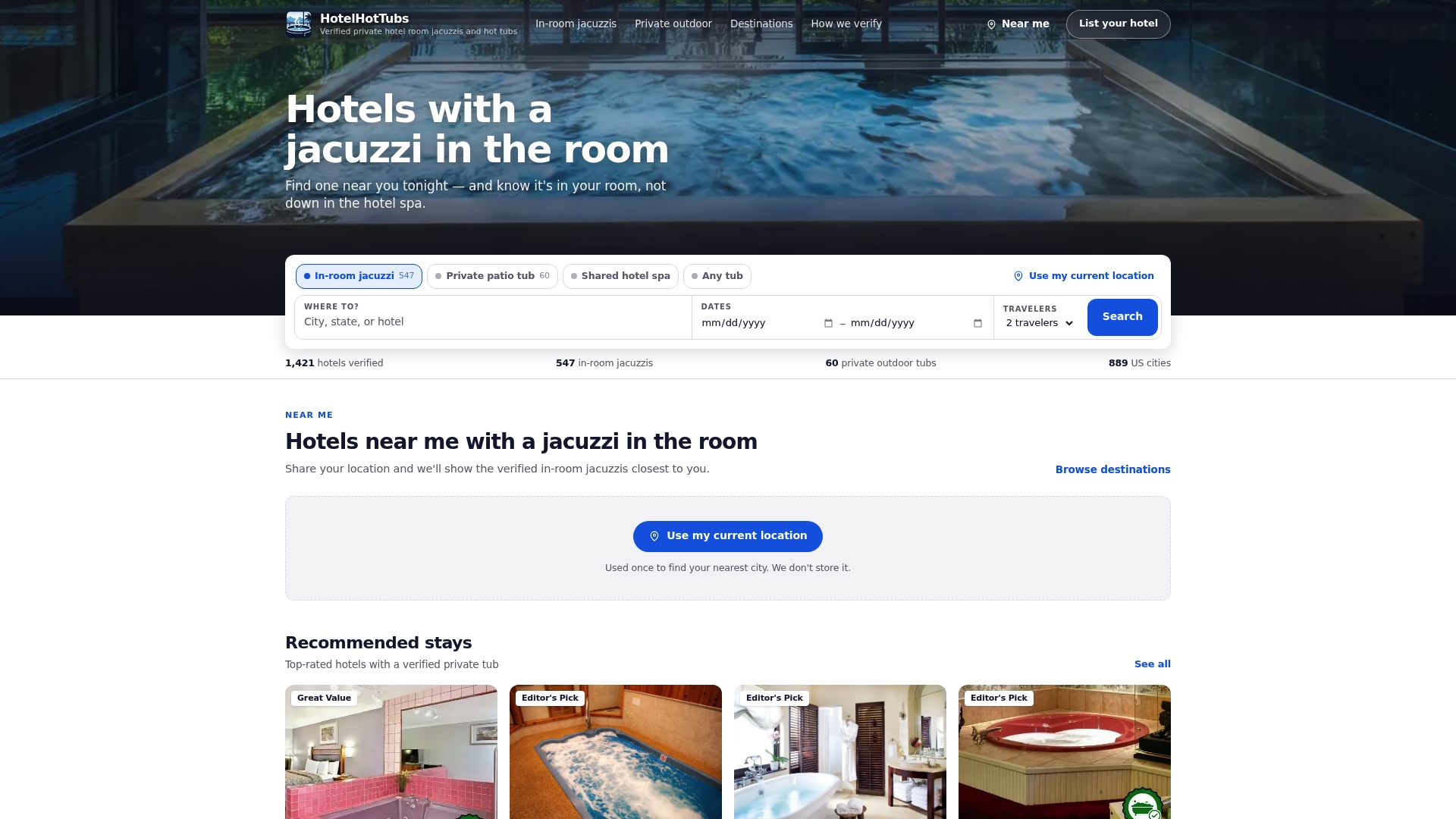
If avoiding fee surprises and tub mix-ups sounds like a better way to plan your next stay, start browsing verified hotels with a jacuzzi in the room and compare your options before you book.
FAQ
What is it called when a hotel has a jacuzzi in the room?
This is usually marketed as a "jacuzzi suite," "whirlpool suite," or a room with an "in-room jacuzzi," distinguishing it from a hotel that only offers a shared spa or pool-area hot tub. Our suites listings use these same terms to help travelers search by the type of private tub they want.
Is $300 per night for a hotel expensive?
Whether $300 a night is expensive depends entirely on the market and room type, since that rate can be mid-range in a major city but high for a small town. For a jacuzzi suite specifically, $300 often falls within a reasonable premium range once mandatory fees and taxes are factored into a standard room's base rate in the same market.
How much does the average jacuzzi cost?
The rate figure reflects the hotel room rate itself, not the cost of purchasing a standalone jacuzzi unit.
What hotel chain has a jacuzzi in the room?
Jacuzzi and whirlpool suites show up across independent hotels, motels, and various chain properties rather than being limited to one brand, and availability depends heavily on the specific location. Searching by verified in-room listings, such as those on our whirlpool suites page, is a more reliable way to find one than searching by chain name alone.