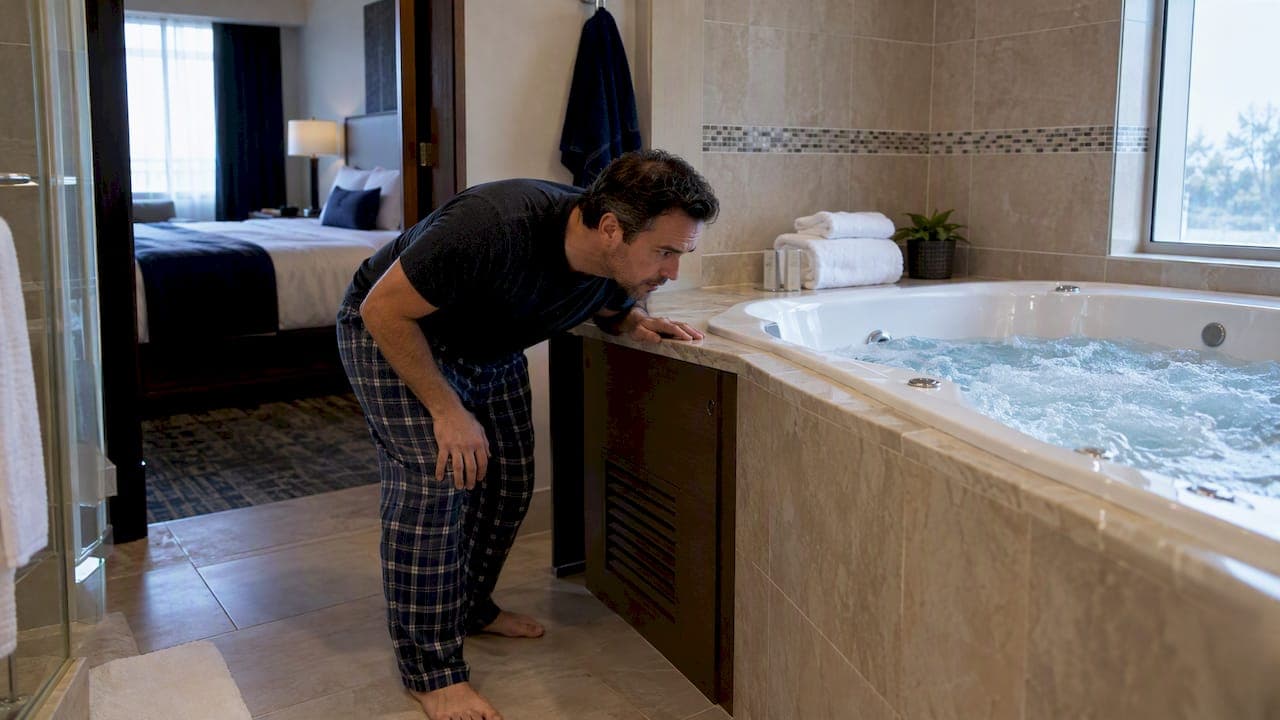
Bubbling and a steady pump hum are normal in a jacuzzi room, while grinding, screeching, or a hum with no water flow points to a mechanical problem. Start with the quick checks: confirm the water level, clean the filter, bleed trapped air, and reset the GFCI or breaker. If the hum continues without water moving, stop using the tub and call a technician.
TL;DR:
- Before opening access panels, cut power at the breaker, then check the water level, clean the filter, bleed trapped air, and reset the GFCI.
- If the pump hums without moving water, stop using the tub and call a technician because a jammed impeller or failing bearing may cause damage.
- Properly ventilated acoustic enclosures can reduce pump and filter noise by 10–18 dB, while wall foam does little to block low frequency rumble.
- Phone sound meter apps provide rough comparisons, not exact readings, so measure beside the equipment, at the bed, and by the entry door.
- Ask whether a hotel tub's pump sits near the bed; on arrival, run it briefly and listen from the bed and doorway.
Table of Contents
- What do common jacuzzi and hot tub sounds usually mean?
- How loud is a jacuzzi in a room, and how do you measure it?
- Troubleshooting checklist: when to fix it yourself and when to call a pro
- How can you reduce jacuzzi room noise with soundproofing and placement?
- Which safety and comfort notes connect to noise and operation?
- How does jacuzzi noise affect hotel guest experience and privacy?
- How do in-room jacuzzi noise levels compare with shared spa facilities?
- What hotel design choices minimize jacuzzi noise?
- A traveler's view: what to ask and test before and after you check in
- How we help you avoid noisy or unclear in-room jacuzzis
- FAQ
- Sources
What do common jacuzzi and hot tub sounds usually mean?
Most sounds a jacuzzi makes fall into a few families, and learning them is quick. The goal is to separate everyday operation from early warning signs.
- Bubbling and gentle jet noise: Normal. It comes from air mixing with water as it rushes through the jets, and turning the air controls up or down changes the tone.
- A steady circulating-pump hum: Normal while the tub circulates. What matters is any change in character, such as an irregular or intermittent hum that wasn't there last week.
- Gurgles or burbles: Usually air in the lines or a low water level. They often fade after you refill and bleed the system.
- Grinding, screeching, or metallic rattles: These point to worn bearings, seals, or an impeller, and they deserve prompt inspection. Manufacturer guidance describes grinding or screeching as early warning signs of pump component failure, and catching them early can prevent costlier repairs.
- Occasional clicking: Often a valve, relay, or thermostatic switch doing its job. It's fine if infrequent, but worth a look if it becomes constant.
Technical support guides stress the same distinction: a steady hum is typical, but variation or a hum without water movement signals an active problem. Trust your ear for change. A tub that has always hummed is less worrying than one that started a new sound yesterday.
How loud is a jacuzzi in a room, and how do you measure it?
Sound fades as you move away from its source, so the same tub can feel quiet at the bed and loud beside the equipment. Room acoustics matter too. Hard tile, glass, and bare walls bounce sound around and make it seem louder, while carpet and curtains soak some of it up.
A phone sound meter app gives you a quick, useful comparison. Treat the numbers as rough, because phone microphones and apps vary in accuracy. Compare readings against each other rather than treating any single number as exact.
Measure at three points:
- Near the tub or equipment
- At the pillow position on the bed
- At the room entry door
Quiet enough for sleep generally means the bed reading sits well below the reading beside the tub, and a hallway reading that barely rises above the ambient level means neighbors are unlikely to notice. If the bed reading is close to the equipment reading, sound is traveling through the room or the structure, and the fixes in the later sections will help.
Acoustic enclosure data from industry references puts noise reductions from properly engineered enclosures at about 10 to 18 dB for pump and filter noise. That is a big drop, and it shows how much of the sound you hear comes from the equipment rather than the water.
Troubleshooting checklist: when to fix it yourself and when to call a pro
Work through these steps in order. Safety comes first, so cut power to the spa at the breaker before you open anything or inspect equipment.
- Cut power at the breaker before touching the pump area or any access panels.
- Check the water level. A level below the skimmer or intake lets the pump suck air, which causes gurgling and a rough hum. Top it up.
- Clean or replace the cartridge filter. A clogged filter starves the pump and makes it strain.
- Reset the GFCI or breaker. Diagnostic guides list a tripped GFCI or breaker, airlocks, clogged filters, and low water among the common causes of pump trouble, and many basic checks resolve the issue.
- Bleed trapped air from the suction lines, especially after a refill. Air in the system is a frequent cause of pump noise.
- Restore power and listen. If the sound smooths out and water moves normally, you're done.
If the tub hums but water doesn't move, stop. Manufacturer guidance says persistent humming without water flow is a critical red flag often linked to a jammed impeller, failing bearings, or a faulty start capacitor, and immediate action prevents secondary damage and possible full pump replacement.
A persistent low rumble that continues even after the equipment is isolated suggests mounting or structural vibration. Simple fixes such as clean filters and bled air commonly solve gurgles and rough hums. A pump that keeps grinding or humming dry is the likely candidate for replacement.
Pro Tip: Record a short video with sound when the noise happens. A technician can often tell a failing bearing from an air problem before they arrive.
How can you reduce jacuzzi room noise with soundproofing and placement?
Distance is the cheapest noise reducer. If the tub or its equipment can move farther from sleeping areas and doors, do that first. Orientation helps too: pointing equipment access panels away from the bed sends less sound straight at you.
After placement, go after vibration, because noise that travels through floors and walls is hard to block later.
- Vibration isolation: Use anti-vibration pads, isolation mounts, and flexible connectors under and between the pump and the structure. This stops the rumble that carries through the floor.
- Acoustic enclosures: Designed with ventilation, they can cut pump and filter noise by about 10 to 18 dB by combining mass-loaded materials with sound-dampening structures that don't block airflow.
- Soften the room: Rugs, heavy curtains, and absorptive panels reduce reflections and the perceived loudness of whatever sound remains.
- Keep it ventilated: Don't over-seal equipment compartments. Trapped heat can lead to premature component failure or thermal shutdowns, which creates its own noises and its own repair bill.
Think of it as three layers: distance, then isolation from the structure, then absorption in the room. Skipping straight to foam on the walls rarely works, because foam does little against low-frequency rumble.
Pro Tip: Before buying anything, press a hand on the tub shell or cabinet while it runs. If the buzz fades under your palm, vibration isolation will probably help more than wall treatments.
Which safety and comfort notes connect to noise and operation?
Unusual noise often travels with neglected maintenance, so it helps to keep health and equipment care in the same picture. The CDC recommends keeping hot tub water at or below 104°F (40°C) and notes that limiting time in the water is commonly advised. For guests, it's also worth knowing what a safe hotel jacuzzi temperature looks like before you book.
Keep disinfectant and pH in range, too. Hot water, small volumes, and heavy use raise the risk of germs like Legionella, and public and display tubs have extra monitoring needs, with the CDC recommending automatic feed and control systems for disinfectant and pH. Buildup from poor water care also stresses pumps and heaters, which can show up as odd sounds.
How does jacuzzi noise affect hotel guest experience and privacy?
For a guest, noise is more than a decibel reading. A tub that runs, cycles, or gurgles in the middle of the night can wreck a romantic weekend, and sound that leaks through a shared wall turns a private amenity into a shared one. Guests who pay extra for an in-room jacuzzi expect to hear their own bubbles, not the neighbor's pump or the building's mechanical closet.
Privacy is acoustic as well as visual. A bathroom or suite that lets laughter, water, and pump noise drift into a hallway or an adjoining room can make guests self-conscious about using the very feature they booked. On the flip side, a tub that is truly private, with equipment placed away from the sleeping area, lets people relax without worrying who hears them.
Expectations also differ by trip. Couples on a quiet getaway notice a humming pump that a family on a busy weekend would ignore. Light sleepers and business travelers who need an early start tend to be the most sensitive. If noise matters to your stay, say so when you book, and ask whether the equipment sits near the bed or the entry door. Our own jacuzzi check covers quick things to inspect on arrival, and the same habit of looking and listening early applies to noise.
How do in-room jacuzzi noise levels compare with shared spa facilities?
An in-room jacuzzi and a shared spa are different acoustic environments, and neither is simply louder. A shared spa usually sits in a pool hall or wellness area built with larger equipment, and the main noise there is crowd noise: conversation, splashing, and echo off hard surfaces. The pump is often tucked into a dedicated mechanical space, so guests rarely hear it.

An in-room tub puts the equipment much closer to where you sleep. The pump may sit behind a wall, under the tub, or in a nearby closet, so even a modest hum can reach the bed. What you gain is control: you decide when the jets run and who is there, and the room is quiet whenever the tub is off.
Shared facilities add unpredictability. You can't turn off other people's voices, and a busy evening can be louder than any pump. In-room tubs are the more predictable choice for guests who value privacy, as long as the equipment is well placed and maintained. If you're weighing the two, check where the pump sits and when the tub last got serviced. Some of our listings are suites with their own whirlpool tubs, which keeps the soaking experience inside your own door.
What hotel design choices minimize jacuzzi noise?
Hotels can solve most noise problems on the drawing board, long before a guest ever hears a hum. Room layout is the biggest lever. Placing the tub and its equipment on a wall shared with a bathroom or closet, rather than with a neighboring bedroom, keeps sound away from sleepers. Putting mechanical access panels outside the sleeping area also helps maintenance staff work without disturbing guests.
Materials come next. Mass is what blocks sound, so heavier wall assemblies, dense insulation in the cavity, and sealed penetrations around pipes all cut transmission. Flexible connectors and isolated pump mounts stop vibration from traveling into the floor slab, which is where rumble usually enters adjoining rooms. Inside the room, tile and glass bounce sound, so a few absorptive elements such as rugs, upholstered headboards, and heavy drapes bring perceived loudness down.
Ventilation has to be designed alongside the noise control. Enclosures and insulated compartments need airflow, because trapped heat shortens component life and can trigger shutdowns. Done well, the equipment stays cool, quiet, and serviceable. Travelers can borrow the same logic: a ground-floor or end-of-hall room, or one away from the mechanical closet, tends to be the quiet pick. A partner guide on yacht amenities makes a similar point about verifying amenities before you commit.

A traveler's view: what to ask and test before and after you check in
Noise surprises usually come from not knowing where the tub's equipment sits. We verify tub location with photos and guest notes, which takes away much of the guesswork about whether you'll be sleeping next to the pump. Verification doesn't promise silence, but it does cut the risk of being surprised.
On arrival, run the tub briefly and listen from the bed and the doorway. If something sounds off, ask politely for a different room before you unpack. When booking, ask about maintenance schedules and request a room away from mechanical closets. Our call script for confirming a private tub works well for these questions, and our guide before you book covers safety. Realistic expectations help: a gentle hum is normal, grinding is not.
— Logan Oneal
How we help you avoid noisy or unclear in-room jacuzzis
If noise is a dealbreaker, start with listings where the tub's location is already confirmed. We check tub placement with photos and guest feedback, so you know whether the jacuzzi is truly in your room and can judge likely noise exposure before you pay.
- Use our verification details, and contact the property about maintenance if sound is a concern.
- Browse hotels with a jacuzzi in the room for verified private tubs.
- Compare jacuzzi suites and romantic hotels with a jacuzzi in the room for quiet couple stays.
Pick a room, check the photos, and ask about the pump location when you reserve.
FAQ
Why is my jacuzzi hot tub making a humming noise?
A steady hum is usually the circulation pump doing its normal work. If the hum is louder than before or the water isn't moving, a jammed impeller, failing bearing, or faulty start capacitor may be the cause, so turn the tub off and have it inspected.
Why is my hot tub noisy?
Common causes are low water, a clogged filter, or air trapped in the lines. Top up the water, clean the filter, bleed the air, and reset the GFCI, since these basic checks often resolve pump noise. Grinding or screeching needs a technician.
Do hot tubs make a noise when not in use?
Yes, usually a little. Most tubs run the circulation pump, heater, and filtration on a schedule to keep the water clean and warm, so a quiet hum or the occasional click is normal. A loud or constant sound when the tub is idle is worth checking.
How can I make a jacuzzi room quieter?
Increase distance from the bed, add vibration isolation under equipment, and soften the room with rugs and curtains. Properly ventilated enclosures can cut pump noise noticeably, but never seal the equipment completely, because heat buildup causes its own problems.
Sources
- Hot Tub Pump Not Working? Troubleshooting & Repair Guide | Jacuzzi®
- Softdb
- What You Can Do to Stay Healthy in Hot Tubs | Healthy Swimming | CDC