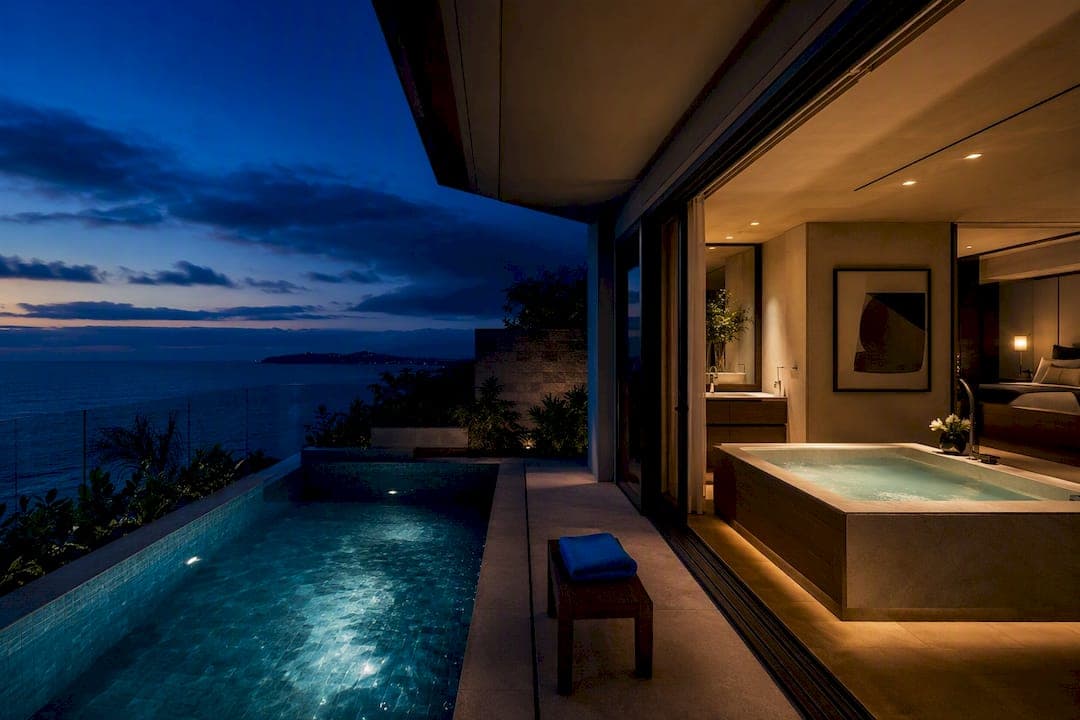
For most couples booking a private romantic stay, an in-room hot tub beats a plunge-style room pool because it delivers warmth, jets, and seated privacy in a smaller footprint. Choose a plunge pool instead if you want a cooling dip, more room to move, or a design that suits a warmer climate. Whichever you pick, confirm the amenity with photos and clear privacy wording before you book.
TL;DR:
- Hot tubs maintain warmer temperatures suitable for relaxing soaks, while plunge pools are cooler and often adjustable for quick dips or movement.
- CDC guidelines recommend hot tub water not exceed 104°F (40°C) and require disinfectant testing at least twice daily, especially for private in-room units.
- Verify private hot tubs with recent photos, control details, and written confirmation of maintenance, as listings often inaccurately depict amenity location and condition.
- Space considerations favor hot tubs for in-room installation due to their compact size, while plunge pools typically require outdoor terraces or larger areas.
- Pregnant travelers should avoid hot tubs or limit exposure, since heat and aerosols raise health risks; plunge pools pose fewer heat-related concerns.
Table of Contents
- Comparing Temperature, Jets, Space, Privacy, and Upkeep
- What CDC Safety and Maintenance Standards Should a Hotel Meet?
- The Booking Checklist: Photos to Request and Questions to Ask
- Matching the Amenity to Your Trip
- How Much Room Does Each Amenity Actually Need?
- Comparing Energy Use and Running Costs
- What Installation Says About the Room You're Booking
- Health Benefits and Risks Worth Knowing Before You Soak
- Does the Season Change Which One You Should Book?
- Why Verification Matters More Than the Listing Description
- Where to Find Verified In-Room Jacuzzi Listings Now
- Sources
- FAQ
Comparing Temperature, Jets, Space, Privacy, and Upkeep
The two amenities solve different problems, and the differences show up the moment you step in.
Hot tubs typically run at warm temperatures suitable for a relaxing evening soak but are capped at a safe maximum to prevent burns, as discussed below. Plunge-style room pools run cooler, often adjustable, and some properties keep them unheated for a quick cold-immersion dip rather than a long soak. That temperature gap alone tends to decide which amenity fits your trip.
Jets are the other dividing line. A hot tub's jets create the aeration that gives it a hydrotherapy feel, but that same aeration generates aerosols, which raises the maintenance bar (more on this shortly). Plunge pools generally skip jets altogether, favoring stillness and depth over massage-style bubbles.
Space changes the experience too. A plunge pool, even a small one, gives you room to stretch out or take a few strokes. A hot tub is built for sitting, not swimming, which makes it better suited to a small suite footprint.
Privacy and location vary by property, and this is where bookings go wrong most often:
- In-room tubs sit inside the guest room itself, often positioned near the bed or window.
- Private terrace tubs are outdoors but restricted to your unit, reachable only through your room or a locked gate.
- Shared spa tubs are common-area amenities you book alongside other guests, not the private experience most romantic-stay travelers want.
Maintenance needs differ sharply as well. A hot tub's warm, low-volume water needs disinfectant and pH checked often, because bacteria multiply faster in warm water than in a cooler plunge pool. A plunge pool run at lower temperatures needs less frequent chemical monitoring, though it still requires regular filtration and cleaning.
What CDC Safety and Maintenance Standards Should a Hotel Meet?
Hotel hot tubs are governed by public health guidance that applies just as much to a private in-room unit as to a shared spa. The CDC recommends that hot tub water never exceed 104°F (40°C), a limit tied to burn risk and how heat affects the body over a soak.
Statistic: The CDC's hospitality operating guidance calls for disinfectant and pH testing at least twice daily in hot tubs, with water replaced regularly on a schedule that varies from weekly to monthly based on usage levels. That cadence matters because low water volume and high heat make hot tubs harder to keep balanced than a standard pool.
Here is what that guidance means in practice for both operators and guests:
- Operators test water twice a day at minimum, checking disinfectant levels and pH before guests use the tub.
- Operators follow a drain-and-refill schedule rather than topping off the same water indefinitely.
- Operators maintain filters and consider automatic disinfectant feed systems, which the CDC's Legionella control guidance recommends because jets and warm water create aerosols that can spread Legionella, the bacteria behind Legionnaires' disease.
- Guests shower before entering to reduce what enters the water.
- Guests avoid swallowing water and skip the tub entirely if they have had diarrhea recently.
Pregnant travelers and parents of young children should treat hot tub use with extra caution, since heat exposure and drowning risk both carry documented warnings in CDC guidance. A private room does not exempt anyone from these limits: a poorly maintained in-room tub can expose you to the same risks as a poorly maintained public one.
The Booking Checklist: Photos to Request and Questions to Ask
A listing photo or a glowing description is not proof of a working, well-maintained tub. Before you book, request or look for the following:
- A wide-angle shot of the room that shows the tub actually positioned inside the guest room, not just near it.
- A close-up of the controls and any posted service tags, which often reveal when the unit was last serviced.
- Recent guest photos, ideally from the past few months, showing clear water rather than a stock image from years ago.
Then ask the property directly:
- When was the tub last drained and refilled?
- How often is disinfectant and pH checked?
- Are the jets currently operational, or has anyone reported issues?
- Is the tub fully inside the room I am booking, or is it a shared or terrace unit?
Pro Tip: Ask for the tub question in writing, by email or chat, so you have a record if the room does not match what was promised.
Watch listing photos and reviews for red flags: cloudy or discolored water, visible residue on the tub walls, mentions of a strong chemical smell, or vague wording like "jacuzzi access" that avoids saying the tub is private. If a property cannot answer basic maintenance questions or the photos look years old, ask for a written booking guarantee that the described amenity will be in your room, or choose a different property. A companion checklist on hotel hot tub safety walks through these same questions in more detail.

Matching the Amenity to Your Trip
The right choice depends on what you actually plan to do in the room, not on which word sounds more luxurious.
- Warm evening soak with privacy: an in-room hot tub or jacuzzi is generally the better fit, since it is built for sitting and relaxing in heated water.
- Cooling dip or a bit of movement: a plunge-style pool suits this better, especially in warmer climates where a hot tub feels like overkill.
- Traveling with children: treat hot tubs with caution given CDC guidance on heat exposure and drowning risk for young kids, and look for properties that state explicit age limits and safe depths rather than assuming a "family suite" is child-appropriate.
- Maintenance transparency matters to you: favor listings that show verification photos or state a maintenance cadence, rather than a bare "in-room jacuzzi" label with no evidence behind it.
For romantic getaways specifically, booking guidance built around in-room jacuzzi hotels can help you narrow the search to properties that fit that exact use case.
How Much Room Does Each Amenity Actually Need?
Space is often the deciding factor before temperature or jets ever enter the conversation. An in-room hot tub is typically sized to fit within a standard suite footprint, tucked into a corner, alcove, or bathroom extension, since it is designed for two people to sit rather than move around.
A plunge-style room pool needs meaningfully more floor space and, often, a dedicated outdoor terrace or enclosed patio rather than interior floor space, since it is deeper and meant for a few steps of movement. That is one reason plunge pools show up more often as private terrace features than as in-room fixtures. If your priority is a true in-room amenity rather than an adjacent private space, a hot tub is more likely to fit inside the walls of your actual room.
Comparing Energy Use and Running Costs
Hot tubs and plunge pools draw power differently, and that difference affects how properties price and maintain them, even if it rarely shows up on your bill directly. A hot tub's heater runs more often because it maintains a warmer set temperature around the clock, and its jets add pump load whenever they are switched on. A plunge pool kept at a lower or ambient temperature needs less constant heating, though any pool that is heated for comfort in cooler weather will draw power for that too.
For travelers, this mostly matters indirectly: properties with higher-maintenance amenities like heated, jetted hot tubs tend to build that into room rates or resort fees. It is also part of why documented maintenance matters when you are evaluating a listing. A property that invests in proper filtration and automatic disinfectant systems is more likely to keep the amenity running well throughout your stay, rather than shutting it down mid-visit for repairs.
What Installation Says About the Room You're Booking
You will not install anything as a guest, but understanding the basic requirements behind each amenity helps you read a listing more critically. An in-room hot tub needs reinforced flooring or a ground-floor location to handle the weight of water and equipment, along with dedicated electrical and plumbing lines run to that specific room. That is why not every room in a hotel has one, even when the property advertises "rooms with jacuzzis" broadly.
A plunge pool involves structural work on a different scale entirely: excavation or a built platform, waterproofing, and often a separate filtration system from the rest of the property. This is a major reason plunge pools show up as shared or terrace-level features rather than something built into every guest room. When a listing claims an in-room amenity, that structural reality is exactly why photo verification matters: a real in-room hot tub required real plumbing and electrical work specific to that unit, not a marketing description applied loosely across a whole property.
Health Benefits and Risks Worth Knowing Before You Soak
A warm hot tub soak can ease muscle tension and help you unwind after a day of travel, which is much of its appeal for a romantic stay. The same warmth and jets that make it relaxing are also what raise the maintenance stakes covered earlier: warm water encourages bacterial growth, and jets aerosolize water in ways that can spread Legionella when a tub is not properly maintained, according to CDC guidance on hospitality settings.
A plunge pool's cooler water carries a different profile. Cold or cool immersion is often used for post-exercise recovery, and the lower temperature reduces (though does not eliminate) the bacterial growth conditions that make hot tub maintenance so demanding. The tradeoff is less of a muscle-relaxing effect and, in an unheated pool, less comfort in cold weather.
For both amenities, the same guest precautions apply: shower before entering, avoid swallowing the water, and skip use if you are feeling unwell, particularly with any recent stomach illness. Pregnant travelers should be especially cautious with hot tub heat exposure, and parents should treat both amenities as needing active supervision around young children.

Does the Season Change Which One You Should Book?
Climate and time of year shift the calculus more than most travelers expect. A heated in-room hot tub works year-round regardless of outside temperature, which is part of why it remains the more consistent choice for a romantic getaway booked any month of the year.
A plunge pool's usability depends heavily on whether it is heated and whether it is indoors or on an open terrace. An unheated outdoor plunge pool is a summer amenity in most climates and may sit unused or even be closed seasonally in colder months. If you are booking a plunge-style pool for a trip outside the warm season, confirm directly whether it is heated and whether the property keeps it operational year-round, since a photo taken in July does not guarantee the same experience in January.
Why Verification Matters More Than the Listing Description
Most booking friction comes down to one gap: a listing says "jacuzzi suite" or "private hot tub," but the tub turns out to be shared, outdoors when you expected in-room, or simply not there. Hotel Hot Tubs exists specifically to close that gap, verifying the exact tub location for each listed stay with photo or review evidence rather than relying on a property's marketing copy alone.
User feedback commonly highlights the importance of accuracy, specifically the reassurance of knowing the tub is private and actually inside the booked room before arrival. Filters for romantic stays, budget ranges, and whirlpool suites can help narrow results to properties with private amenities, rather than sorting through generic hotel listings one by one.
Where to Find Verified In-Room Jacuzzi Listings Now
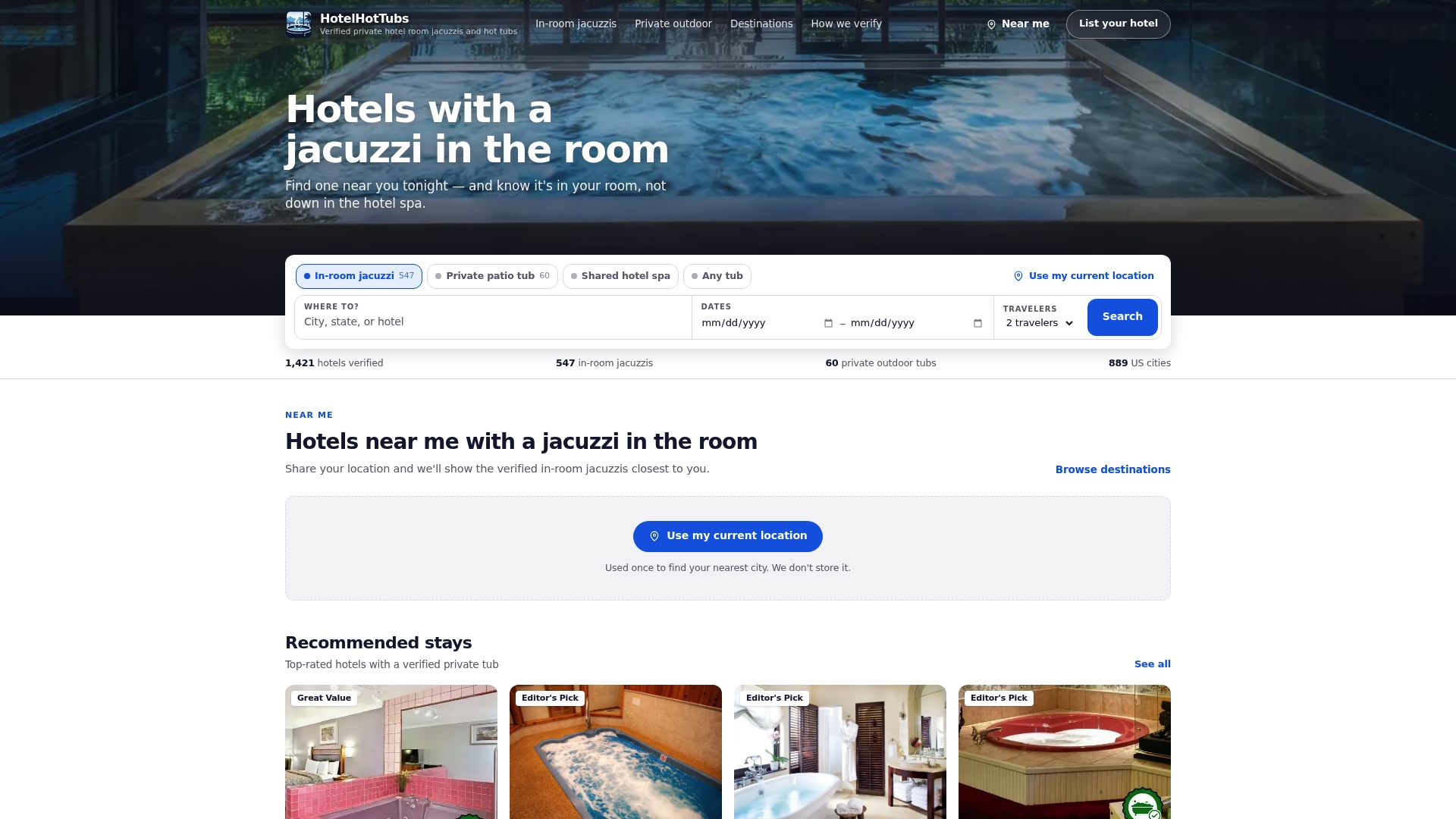
A few starting points depending on what you are after:
- Want the classic warm soak experience: browse whirlpool suites.
- Prefer a private outdoor setup instead of in-room: check hotels with a private hot tub.
- Planning a getaway specifically: start with romantic hotels with a jacuzzi in the room.
| If you want | Try this filter first |
|---|---|
| Warm in-room soak on a budget | Cheap hotels with a jacuzzi in the room |
| Private terrace tub | Hotels with a private hot tub |
| Romantic weekend stay | Romantic hotels with a jacuzzi in the room |
| Combined indoor pool and tub | Hotels with an indoor pool and a hot tub in the room |
A good general habit before booking anywhere: check listing photos the way you would check a vacation rental property page, where captions and angles usually make clear whether an amenity is inside the unit or on a shared terrace.
This article is general information, not a substitute for advice from a qualified doctor. Consult a qualified healthcare professional about your own circumstances before acting on anything here.
FAQ
Is it safe to use a hot tub while pregnant?
CDC guidance flags heat exposure in hot tubs as a concern during pregnancy, so pregnant travelers should talk with their doctor before using one and consider limiting time and temperature exposure. A cooler, unheated plunge pool avoids the heat-exposure concern entirely.
How often should a hotel drain and refill its hot tub?
The CDC's hospitality toolkit recommends a weekly-to-monthly drain and refill schedule depending on how heavily the tub is used, alongside disinfectant and pH testing at least twice daily. Ask the property for its specific schedule before booking if this matters to you.
How can I confirm the jets are actually working before I book?
Ask the property directly whether the jets are currently operational, and request a recent guest photo or video showing the tub in use. Listings verified by Hotel Hot Tubs include photo evidence specifically to confirm details like this before you commit.
Is a plunge pool or a hot tub better for a romantic hotel stay?
For most romantic stays, an in-room hot tub is the better fit because it is warm, private, and built for two people to relax together in a small space. A plunge pool suits couples who want a cooling dip or more room to move rather than a seated soak.
What is the maximum safe temperature for a hotel hot tub?
The CDC recommends that hot tub water not exceed 104°F (40°C). If a property advertises a hotter setting, treat that as a red flag rather than a selling point.
— Logan Oneal