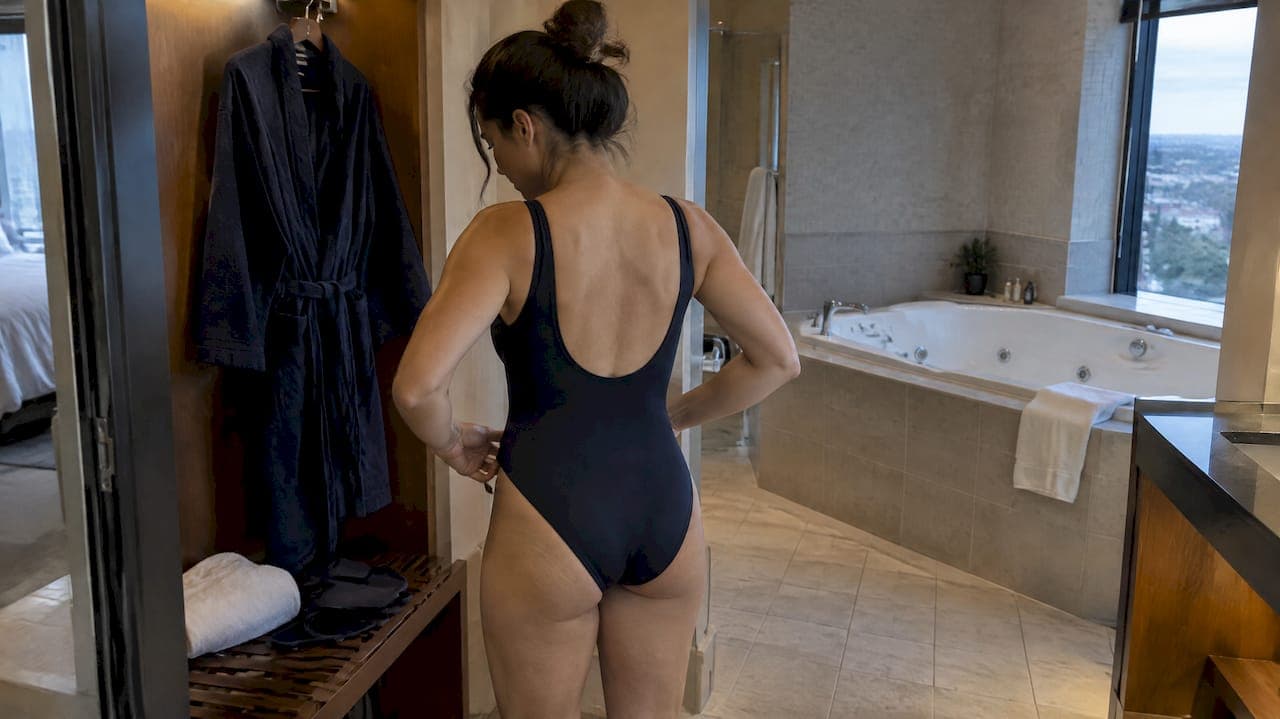
Wear swimwear made for water: a one-piece, bikini, swim trunks, fitted swim shorts, or a rash guard. Street clothes are not a substitute, and a robe or towel belongs outside the tub, not in it. Safety limits, hygiene steps, and a packing list for hotel stays follow below.
TL;DR:
- Use swimwear made from nylon, polyester, or chlorine-resistant blends rather than cotton or terry cloth to prevent retention of water and chemicals.
- Avoid wearing cotton clothing, jeans, or heavy athletic wear in hot tubs, as they trap water and increase irritation risk, and remove jewelry or electronics before entry.
- Shower before and after soaking to remove products and contaminants, and rinse or wash your swimsuit to reduce skin irritation and bacteria buildup.
- Confirm the hot tub is private, in-room, and properly maintained by the property before booking to ensure safety and hygiene standards.
- Children, pregnant women, and those feeling ill or with open wounds should avoid hot tubs or consult a healthcare provider beforehand.
Table of Contents
- Best swimwear and materials for hot tubs
- What not to wear in a hot tub (and why)
- Pre-soak and post-soak hygiene plus safety limits
- Etiquette and facility rules: shared tubs vs private tubs
- Special situations: pregnancy, children, and menstruation
- Packing checklist for hotel or shared hot-tub visits
- Traveler tips: verifying private in-room tubs before you book
- Author perspective: simple rules to make hot tub time stress-free
- Find a verified private jacuzzi for your next stay
- Sources
- FAQ
Best swimwear and materials for hot tubs
The right suit is less about style and more about what the fabric does in hot, chemically treated water. A one-piece or bikini works for most soaks, tankinis offer a middle ground for coverage, and swim trunks or fitted swim shorts cover most men's needs. A rash guard is worth adding if you have sensitive skin or plan a longer soak, since it limits direct skin contact with treated water.
Material matters more than cut. CDC guidance favors nylon, polyester, and other swim-specific blends over cotton, because they dry faster and are built for treated water rather than soaking it up. Cotton and terry cloth hold water and heat against skin, stay damp long after you get out, and were never designed for spa chemicals.
- Choose a one-piece, bikini, tankini, swim trunks, or fitted swim shorts for standard soaks.
- Add a rash guard if you have sensitive skin, a sunburn, or plan to stay in longer.
- Pick nylon, polyester, or chlorine-resistant swim blends over cotton or terry cloth.
- Keep the fit snug but comfortable so nothing shifts loose under the jets.
A suit kept just for treated water, separate from the one you wear at the lake or ocean, also limits how much mineral and biological residue gets carried into the tub.
Pro Tip: Rinse any suit that has been in a lake, river, or ocean before it goes anywhere near a hot tub, and wash and dry your suit after every soak to cut down on skin irritation.

What not to wear in a hot tub (and why)
Jeans, cotton shirts, underwear, sweatpants, and regular gym clothes all share the same problem: they are heavy, slow to dry, and not built for sustained water exposure. Wet denim becomes dead weight and can snag on jets, while cotton underwear and tees trap water against skin long after you get out, which CDC guidance on preventing hot tub rash ties to irritation risk.
- Avoid jeans, cotton shirts, underwear, sweatpants, or athletic wear not made for water.
- Leave jewelry, watches, and phones out of the tub entirely.
- Skip anything freshly washed with heavy detergent, since residue can throw off water chemistry and cause foaming.
Fabric is not the only issue. Freshly laundered clothes that have not been rinsed can carry detergent into the water, interfering with the disinfectant balance operators work to maintain.
Pre-soak and post-soak hygiene plus safety limits
A quick shower before you get in does more than politeness demands. CDC recommends rinsing off lotions, perfumes, fake tan, and heavy sunscreen before entering, since these products feed the organic load that disinfectant has to work against. After you get out, shower again with soap and wash your swimsuit rather than letting it sit damp, since a contaminated suit trapped against skin can contribute to hot tub rash, according to CDC guidance on preventing hot tub rash.
Water temperature should never exceed a safe maximum temperature generally recommended by health authorities, a limit CDC safety guidance sets to prevent overheating. On the maintenance side, CDC's Legionella control toolkit specifies free chlorine residuals within a recommended range, bromine residuals within a typical recommended range, and pH controlled according to health guidelines, all aimed at keeping bacteria in check in water that sits warm for hours.
- Shower before entering to remove lotions, sunscreen, and fake tan residue.
- Shower again after exiting, and wash your swimsuit rather than letting it air dry on your body.
- Rinse any suit used in a lake, river, or ocean before it goes into treated water.
- Skip the soak if the water looks cloudy or carries a strong chemical smell, since both can signal a maintenance problem.
Certain groups should take extra care: young children, anyone pregnant, and anyone who has been drinking. Exit immediately if you feel dizzy, overheated, or lightheaded.
Etiquette and facility rules: shared tubs vs private tubs
Shared hot tubs, whether at a gym, hotel pool deck, or resort, almost always post rules, and it pays to read them before you get in. Most facilities expect standard swimwear, a shower before entry, and a reasonable time limit when the tub is busy.
- Check posted occupancy limits and shower-before-entry signs before getting in.
- Keep noise down, skip glass containers near the water, and give others space when the tub is crowded.
- Expect that clothing-optional norms, while common at some private rentals, are rare at public or shared facilities, so confirm with the property rather than assume.
- Wear waterproof sandals on wet decks and walkways, but take them off before stepping into the tub itself.
Private, in-room tubs at hotels operate differently since you are not sharing the space, but the same hygiene habits (showering before and after, clean swimwear) still apply.
Special situations: pregnancy, children, and menstruation
A few groups need extra thought before soaking. If you are pregnant, talk to a healthcare provider first, since high water temperatures carry particular caution in early pregnancy. For children, Mayo Clinic guidance on kids and water safety advises against hot tub use for young children, since they can overheat faster than adults, and recommends close supervision and short soak times for older kids.
Menstruation is not a reason to skip the tub. Internal products like tampons and menstrual cups are an acceptable choice for hot tub use when used as directed, and normal hygiene, secure swimwear plus a shower afterward, applies the same as any other soak, per CDC hygiene guidance.
- Pregnant: check with a healthcare provider first, particularly in the first trimester.
- Children under five: avoid hot tubs; older kids need supervision and shorter soak times.
- Menstruating: tampons or cups are fine; wear secure swimwear and shower after.
- Skip the soak entirely if you are feeling ill, have an open wound, or had diarrhea recently.
Packing checklist for hotel or shared hot-tub visits
A short, deliberate packing list saves you from improvising with a bath towel wrapped around your waist; for additional tips on packing and preparation, see Pack and prepare for your vacation in Moab. Bring a swimsuit built for water, a robe or cover-up for the walk to and from the tub, a towel, waterproof sandals, and a dry bag or plastic bag to hold a wet suit afterward.
- Swimsuit, robe or cover-up, towel, and waterproof sandals for wet areas.
- A dry bag or plastic bag to keep a wet suit separate from the rest of your luggage.
- A spare suit and travel soap if you plan more than one soak during your stay.
- A waterproof phone pouch if you want it nearby, kept out of the water itself.
Our jacuzzi getaway packing list covers this in more depth for couples planning a hotel stay built around a private tub.
Traveler tips: verifying private in-room tubs before you book
Booking a room advertised with a jacuzzi does not always mean a private one, which is why Hotel Hot Tubs verifies tub location (in-room, private, or shared) with photo or review evidence before listing a property. Calling the property directly adds another layer of certainty.
- Ask where exactly the tub is located: in the room, on a balcony, or in a shared area.
- Ask when the tub was last cleaned or serviced.
- Ask about posted temperature and occupancy limits for that specific unit.
Once you know the tub is private, pack accordingly: a spot to hang a wet suit, and a robe meant for in-room use rather than a shared hallway. Our guide on verifying a hotel hot tub before you book walks through the full conversation to have with the property.
Author perspective: simple rules to make hot tub time stress-free
Three rules cover almost every situation: wear a suit made for water, shower before and after, and respect whatever limits are posted on-site. Confirm a facility is actually maintained before you get in, and if privacy matters to you, a private tub beats a shared one every time. For an in-room soak, use a property's own verification resources rather than guessing from a listing photo.
— Logan Oneal
Find a verified private jacuzzi for your next stay
Shared tubs come with rules, shared water, and sometimes a wait. There are services that list hotels with verified, in-room jacuzzis, so you can know before you book whether the tub is actually private rather than a shared pool-deck feature.

- Search categories like private hot tub rooms or jacuzzi suites depending on what you want.
- Call ahead if you want to confirm recent maintenance on a specific unit.
- Browse romantic hotels with a jacuzzi in the room for a weekend built around a private soak.
Start your search for hotels with a jacuzzi in the room and skip the guesswork that comes with a generic listing.
Sources
- What You Can Do to Stay Healthy in Hot Tubs | Healthy Swimming | CDC
- Are hot tubs safe for kids? | Mayo Clinic community health
FAQ
Can you wear regular clothes in a hot tub?
No, regular clothes like cotton shirts, jeans, or sweatpants are discouraged because they hold water, add weight, and were not designed for treated water. Swimwear made from nylon, polyester, or similar blends is the better choice, as CDC guidance recommends.
Do you wear a tampon in a hot tub?
Yes, tampons and menstrual cups are acceptable for hot tub use when used as directed, since they are internal products rather than clothing. Normal hygiene still applies: wear secure swimwear and shower after your soak, per CDC hygiene guidance.
How long are you supposed to sit in a jacuzzi?
There is no single fixed time that fits everyone, since it depends on water temperature, your health, and how you feel. Keep sessions shorter for children and exit any time you feel dizzy, overheated, or lightheaded, a precaution Mayo Clinic raises specifically for kids.
What do I wear under a robe at a spa?
A swimsuit made for water, the same one-piece, bikini, or trunks you would wear in the tub itself, goes under the robe. The robe is for moving between the tub and changing area, not for wearing in the water.
What should I check before booking a hotel with a jacuzzi?
Confirm whether the tub is actually private and in-room rather than a shared pool-deck feature, since listings can be ambiguous. Hotel Hot Tubs verifies tub location with photo or review evidence for its listed properties, which removes much of that guesswork before you book.